A vendor list looks like a list. It is really a graph. Your call-recording vendor sends transcripts to an AI provider. Your hosting provider runs in someone else’s data centres. Your payroll vendor uses a cloud platform that half your other suppliers also use. These are fourth parties: your vendors’ vendors. You did not choose them, you have no contract with them, and when one of them has an incident, several of your suppliers can be affected at once.
This use case shows how InsightVendors finds fourth parties in documents you already collect — data processing agreements (DPAs) and SOC reports — how to see where they concentrate, and how to react when one has a problem. It uses the demo organisation, Northwind Labs, whose vendors are fictional, and it is careful about what the product does automatically and what is still a person’s job.
In short
- Fourth parties are in documents you already hold. DPAs list subprocessors; SOC 2 and SOC 1 reports name subservice organisations. The Document agent extracts both, with the source.
- Two demo examples. Stackforge’s SOC 2 names Equinix as a subservice organisation. Callwave’s DPA lists OpenAI as a subprocessor, raised as “AI data exposure risk”.
- Concentration is a portfolio view. Insights shows fourth-party concentration: which fourth parties sit behind several of your vendors.
- Reacting is still a managed process. When a fourth party has an incident, find the vendors that depend on it and decide the reaction per tier.
- You only see what vendors disclose. A fourth party that is not in a DPA or SOC report will not appear.
Why fourth parties are a board-level concern
Concentration risk is the possibility that many of your critical services fail together because they share something underneath: a cloud region, a data-centre operator, an identity provider, a payment processor, a model provider. Each vendor might pass its own review. The portfolio can still have a single point of failure that no individual review would reveal.
Regulators have noticed. DORA, applying in the EU from 17 January 2025, requires financial entities to consider ICT concentration risk and to keep a register of information on ICT third-party arrangements, including information about subcontracting for services that support critical or important functions. The EBA outsourcing guidelines address sub-outsourcing. GDPR Article 28 requires a processor to have the controller’s authorisation before engaging another processor and to pass on the same data protection obligations. NIS2 Article 21 lists supply-chain security among its measures. Confirm with your compliance team which apply to you; all of them point to knowing who sits behind your vendors.
data
Breach studies have reported a sharp rise in breaches involving a third party, and several widely reported incidents in recent years spread through a single software or service provider to many downstream organisations. The pattern, rather than any one figure, is the point: shared dependencies turn one incident into many.
Sources: Verizon Data Breach Investigations Report 2024 and 2025 (third-party involvement); IBM Cost of a Data Breach Report 2024 (supply-chain involvement associated with higher cost). Figures vary by year and method.
Where fourth parties are written down
You do not need a separate survey to find most fourth parties. Two documents most vendors already provide list them.
| Document | What it names | What else to read |
|---|---|---|
| DPA (data processing agreement) | Subprocessors: who processes your personal data on the vendor’s behalf, often with purpose and location | Notice and objection rights for new subprocessors; data location; transfer mechanism such as SCCs |
| SOC 2 or SOC 1 report | Subservice organisations: providers whose controls the vendor relies on, such as data centres or cloud platforms | Whether they are carved out of the audit scope; the controls the vendor expects them to operate |
| MSA or terms of service | Sometimes a subcontracting clause, rarely a list | Whether the vendor may subcontract without notice; flow-down of obligations |
The SOC point deserves care. Many SOC reports use the carve-out method for subservice organisations, which means the auditor did not test the subservice organisation’s controls. The vendor’s report is then only half the picture; the other half is the fourth party’s own assurance. Knowing a fourth party exists is the first step to asking for it.
Extraction: Stackforge and Equinix
Stackforge is Northwind’s fictional Tier 1 hosting provider: production systems, $420,000 a year, credentials and customer data. Northwind holds its SOC 2 Type II. When the Document agent read the report, it extracted the type, period, auditor, opinion, exceptions, complementary user entity controls (CUECs) and subservice organisations. One subservice organisation is named: Equinix. It now appears on Stackforge’s Fourth parties tab, with its purpose (“Subservice organization named in the SOC report”) and its source marked SOC.
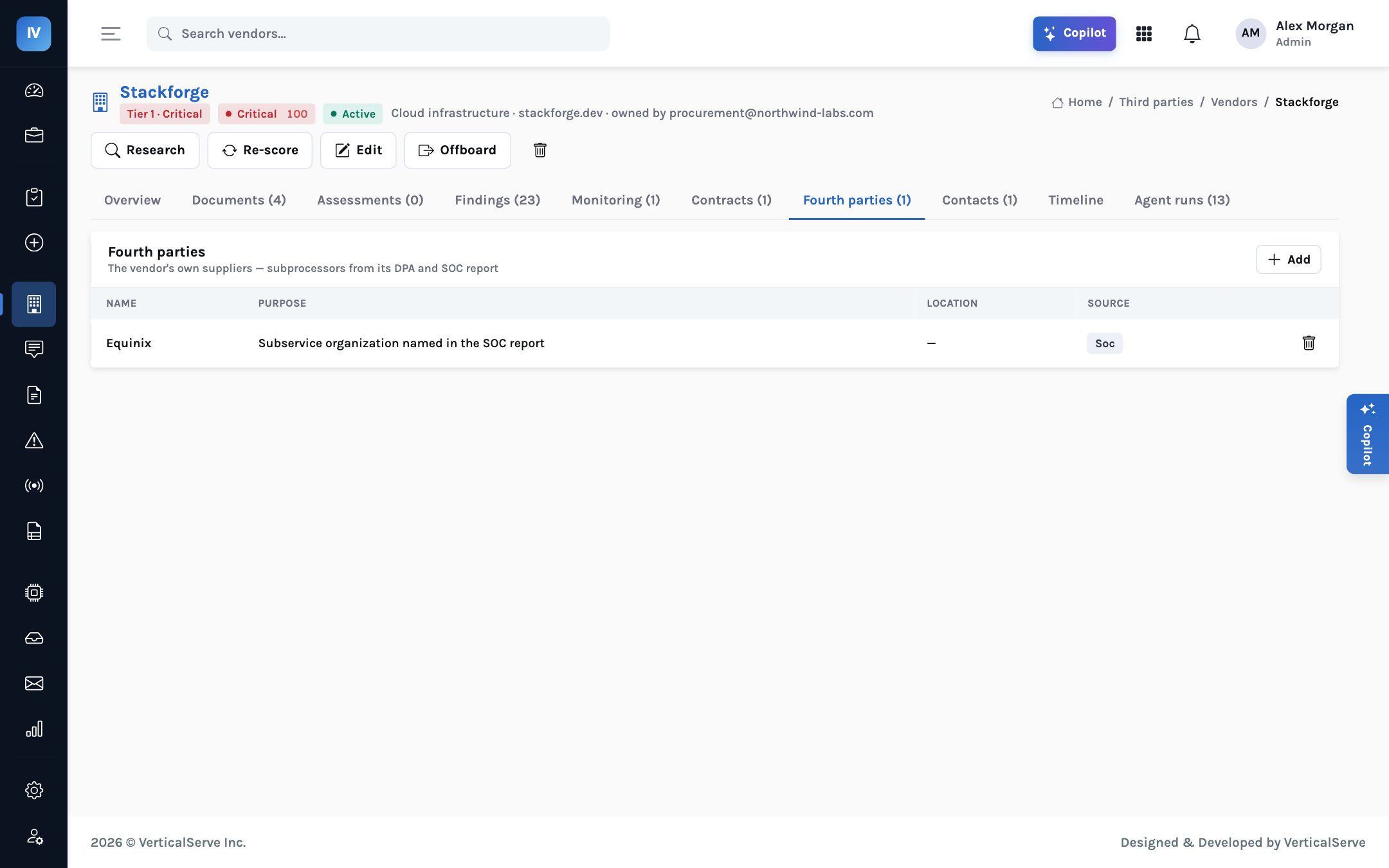
The location column is empty, and that is honest: the SOC report named the subservice organisation but not where. A person can add it. The tab also has an Add button, because some fourth parties come from conversations and questionnaire answers rather than documents.
Extraction: Callwave and an AI subprocessor
Callwave, the fictional Tier 2 call-recording vendor, shows the privacy side. Northwind holds its MSA, DPA and SOC 2 Type II. The DPA’s subprocessor list includes OpenAI, and the Document agent did more than record it: it raised a finding, “OpenAI listed as sub-processor — AI data exposure risk”, citing the page and quoting the text. Callwave’s Fourth parties tab shows three entries in all.
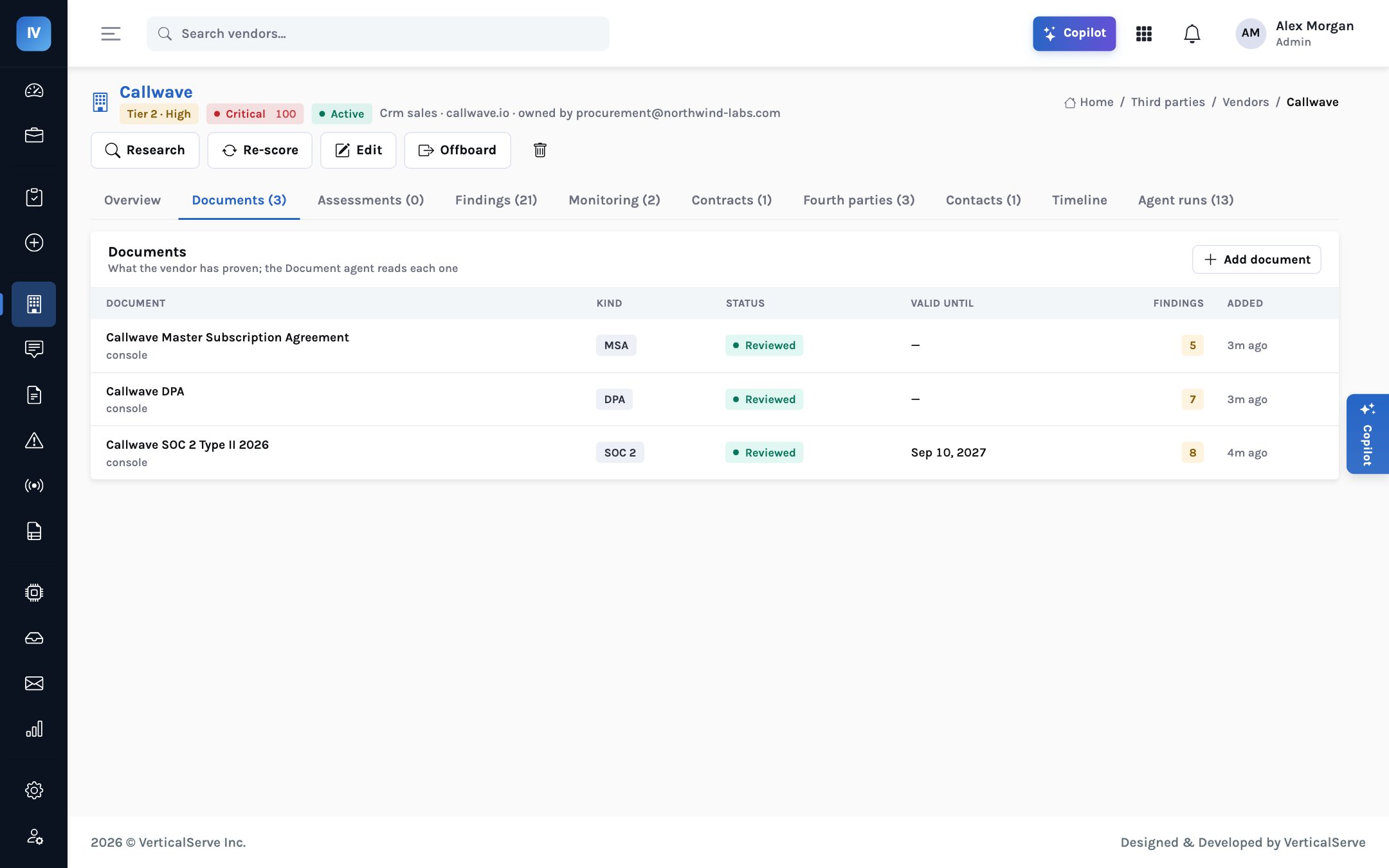
That finding is a good example of why fourth parties matter commercially as well as technically. Sales calls contain customer names, deal terms and sometimes personal details. If those recordings are sent to a model provider, Northwind needs to know on what terms: whether data is retained, whether it is used for training, which region processes it. Those are questions for Callwave, informed by its DPA, and possibly contract changes — not questions Northwind can put to the fourth party directly.
Tier 1 hosting"] N --> CW["Callwave
Tier 2 call recording"] N --> OT["Other vendors"] SF -- "SOC 2 subservice org" --> EQ["Equinix"] CW -- "DPA subprocessor" --> OA["OpenAI"] CW -- "DPA or SOC" --> CX["Two further fourth parties"] OT -. "if listed in their DPA or SOC" .-> EQ
The vendor list as a graph. Dotted line: a shared fourth party only appears if each vendor’s documents name it.
From vendor view to portfolio view
One vendor’s fourth parties are a due-diligence detail. The same fourth party behind many vendors is a concentration risk. Insights has a fourth-party concentration view that aggregates what has been extracted across the portfolio: which fourth parties appear, behind how many of your vendors, and in which tiers. The question it answers is the one a risk committee should ask once a year at least: if this provider went down, or was breached, which of our services would be affected?
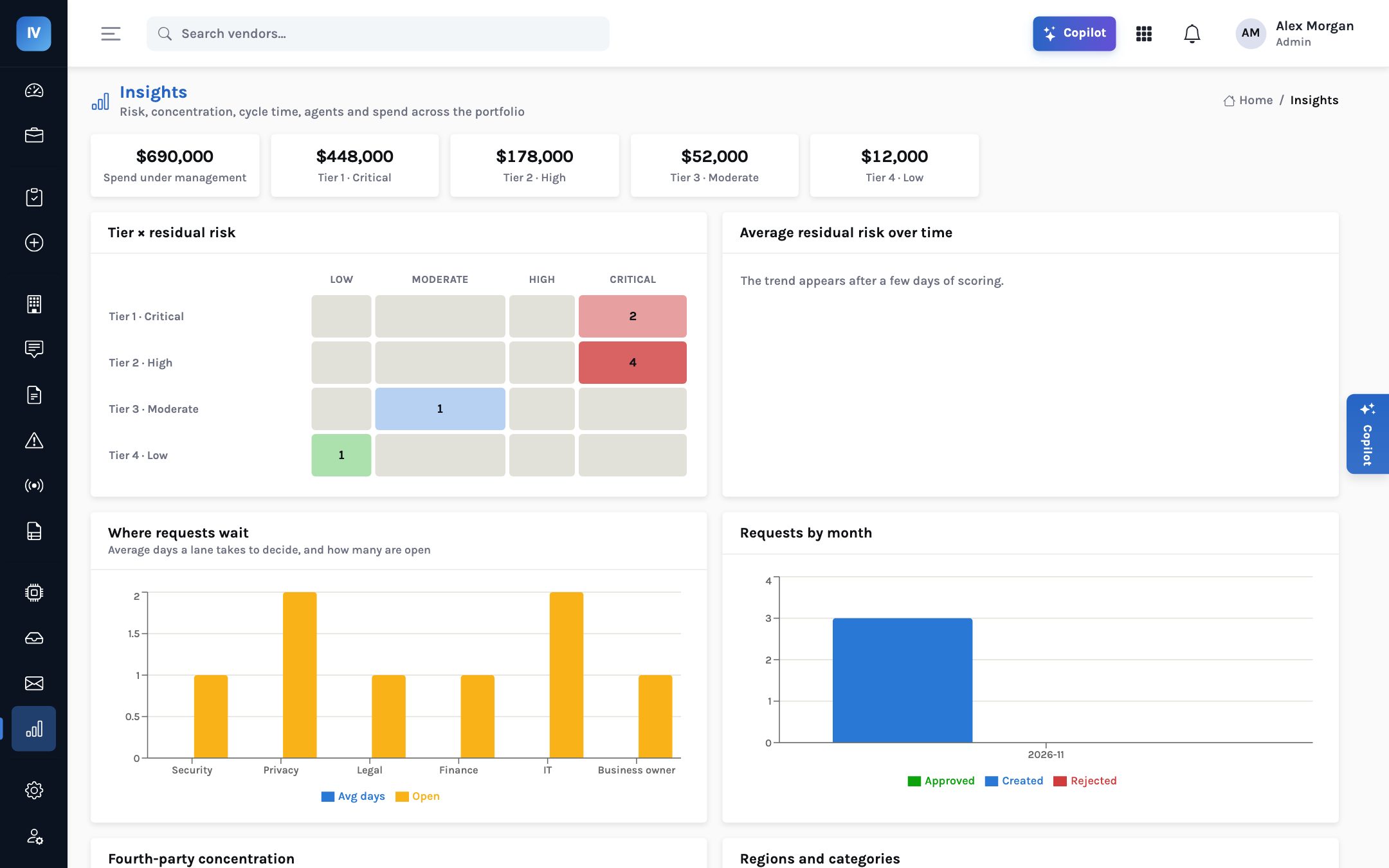
In an eight-vendor demo, the concentration view is small. We will not dress it up with percentages it does not support. In a real portfolio of hundreds of vendors, a handful of cloud platforms, data-centre operators, identity providers and, increasingly, AI model providers tend to appear repeatedly. The value of the view grows with the number of documents read.
| Fourth-party type | Typical concentration question | What to ask your vendors |
|---|---|---|
| Cloud platform or region | How many Tier 1 services run in one region? | Region, failover, recovery objectives |
| Data-centre operator | Is one operator behind several hosting vendors? | Subservice assurance; site diversity |
| AI model provider | Which vendors send our data to a model provider? | Retention, training use, processing region |
| Payment or identity provider | Would one outage stop several processes? | Fallbacks; notification commitments |
When a fourth party has an incident
Monitoring in InsightVendors attaches signals to vendors: a breach, a sanctions hit, adverse media, a financial event, an expiring certificate, portal silence. The Monitoring agent decides the reaction per tier — note, finding, re-assessment or escalation. In the demo, a signal that “Stackforge us-east region outage lasts six hours” produced a finding on Stackforge.
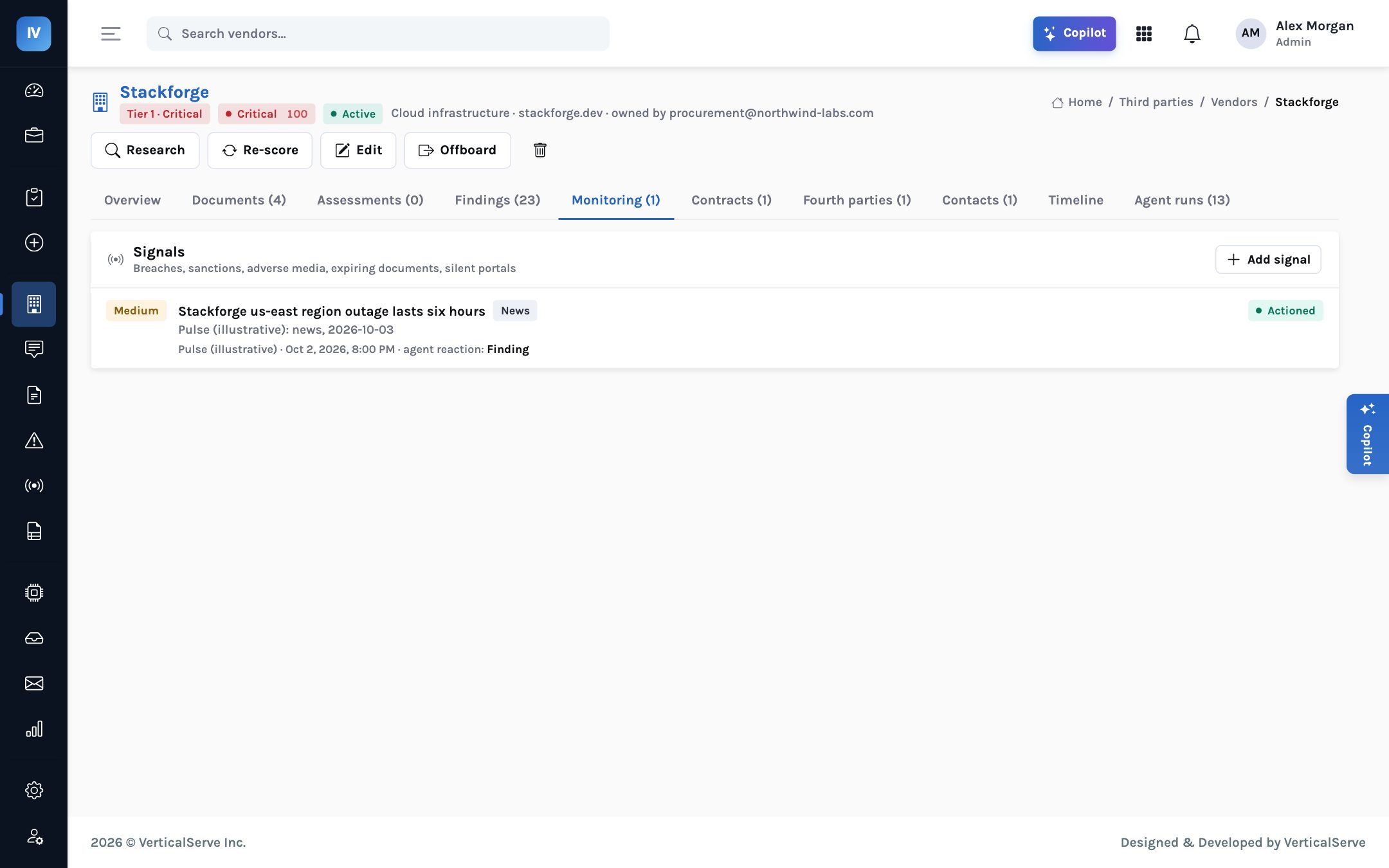
A fourth-party incident needs one more step, and today a person takes it: find every vendor that lists the affected fourth party, then record a signal or open a re-assessment on each, letting the tier decide the urgency. A Tier 1 vendor whose SOC report names the affected provider gets a direct question within the day; a Tier 4 vendor gets a note. The vendor follow-ups the Remediation agent drafts are held in the outbox until someone releases them.
Public statement, news, or a vendor notification. Note what is affected: region, product, data.
Use the fourth-party concentration view and each vendor’s Fourth parties tab.
Tier 1 and 2 first; check what data and systems each touches.
Note, finding, re-assessment or escalation, as the tier requires.
Release follow-ups from the outbox: were you affected, what data, what is your fix and timeline.
Close findings with evidence or accept the risk with an expiry; update the concentration view.
What fourth-party mapping does not do
Fourth parties are extracted from DPAs and SOC reports, so InsightVendors sees only what vendors disclose in documents you hold. A vendor without a DPA or SOC report on file contributes nothing to the map. Locations are often missing and need adding by hand. In 1.0 monitoring signals attach to vendors, not to fourth parties, so finding the vendors behind a fourth-party incident is a person’s step. Names are not always written consistently across documents, so the same provider can appear under two spellings until someone corrects them. A DORA register-of-information export is planned for 1.3, not available today.
What each reader takes from it
For the CISO
The fourth-party map shows where an incident outside your vendor list can still reach your data.
Carved-out subservice organisations are a gap in assurance until you ask for their reports.
For the vendor-risk lead
Extraction comes free with documents you already collect; request DPAs and SOC reports early.
AI subprocessors deserve a finding by default, as Callwave’s did.
For the board
Concentration risk is visible and reviewed at least yearly.
The organisation can say which critical services depend on any named provider.
What it adds up to
Fourth-party risk sounds like an exercise in infinite regress. In practice, most of the useful information is already in two documents you should be collecting anyway. Read them for subprocessors and subservice organisations, keep the source, look at the portfolio once a year for providers that sit behind too many critical vendors, and have a short runbook for the day one of them is in the news.
Your vendor list is a graph. Read the DPA and the SOC report, and you can see most of it.
Extract fourth parties with their source, watch where they concentrate, and when one has an incident, know within the day which of your vendors to call.